This was something I wrote on sabbatical in April 2020 about Half Life: Alyx, which I’d just played and loved, because I wanted to try writing something long-form about a game (or anything non-work-related). More importantly I wanted to think about some narrative and design decisions Valve made. I didn’t and still don’t know what I’m doing. It’s probably shit and wrong. But everyone has to start somewhere. Spoilers throughout, obviously.
Tl;dr of wot I think:
- Alyx Vance is a stronger and more interesting character than Gordon Freeman given both her talkiness but also her character development. HL3 should have a talking Gordon Freeman (but won’t).
- Gordon Freeman isn’t going through a hero’s journey (he can’t) but Alyx Vance is (but it’s only partway through).
- In the end, Alyx Vance will be more important than Gordon Freeman to the narrative future of Half-Life. Her story provides signposts to what could happen next (like the death of Eli or even Gordon, Alyx being betrayed, confrontation with the G-Man). Gordon will still be very important of course.
- Alyx shows how Valve has built on character progression over its games from Dr Kleiner to Eli to GLaDOS to Alyx.
- Alyx is a strong example of environmental storytelling but Valve seems to be relying less on that over time.
- I had a bunch of presumptuous thoughts picking into what’s interesting in the wider Half-Life story. Example: is the G-Man as a god (or, what Rick and Morty shines on Half-Life: Alyx). Also, some ideas for improvement/elaboration.
- I have some plausible suggestions for where the Half-Life story could (will?) go next.
Some context before I start:
(1) I haven’t done any in-depth critique of literature in a long while or of a game ever, I am not a game designer or narrative specialist (but am interested in stories and games), so no doubt I made all kinds of mistakes, but the purpose is to explore and improve.
(2) I want to convey my awe and praise at what Valve accomplished with Half-Life, while also gently opening the series (and Alyx in particular) up a bit critically. I think it ends up providing some useful pointers for what HL3 may involve.
(3) Yes you could answer ‘but it’s a video game’ to most critical narrative questions about a game, but great narrative-driven games can achieve high consistency between gameplay/narrative/world.
[(4) [17.07.20] I wrote this before I read/watched the interactive documentary Half-Life: Alyx – The Final Hours, which goes into quite a lot of how the story of Alyx started, developed and finished. I’ve decided to leave this essay more or less as I wrote it – some I got right, some is still valid, but a fair bit is wrong. That’s OK, it’s part of the learning process. Here’s the really basic cliff notes version of what I learned from that documentary: (i) the story was part of the same iterative process as the rest of the game; (ii) it was rebooted entirely partway through and tweaked significantly even after that; (iii) originally the game was a lot darker and was given a “levity pass” along the way; (iv) they knew early on that the G-Man would be rescued at the end but they didn’t work out until much later what was the point of rescuing him (saving Eli and retconning HL2:E2); (v) there was a fair bit of concern about how to address the prequel problem (how do you take Alyx and finish at HL2) but virtually nothing said about character or world progression; (vi) Alyx Vance might have been silent in very early stages; and (vii) several Valve staff referred to G-Man as God or Satan internally; and (viii) originally there was a villain (Hahn, who was dropped and became the mysterious female scientist in Alyx) and helper (Josef, who became Russell). Also, when you take a big step back, you can see how the story of Alyx is fairly straightforward and follows the gameplay: exposition and environmental storytelling at start, more strung along through the gameplay sections with the Russell and Eli audio discussions along the way, a few setpieces, finishing with the Vault. Anyway, back to the essay.]
Why write about Half-Life, and now?
Half-Life is one of the seminal series in my gaming life – receiving a copy of it as a teenager (bundled with a Dell PC my dad bought me) was a key moment (I still have that CD actually). I recently played Half-Life: Alyx all the way through. I wrote this while on a mini-sabbatical from work and I wanted to try some analytical writing about a game (previously it was going to be Telling Lies, which I still hope to write one day).
This post asssumes a high base level of knowledge about the Half-Life story. Long recap at Wikipedia, natch. Bare bones: in HL1, scientists accidentally open a portal to an alien world that they can’t close and through which Earth is invaded. Our character, Gordon Freeman, fights against both the US military and alien invaders, ultimately visiting the alien world and defeating their boss. He meets an enigmatic “G-Man” who has been watching him around the game and, Gordon having fulfilled the G-Man’s mysterious objectives without even realising it, the G-Man puts Gordon into stasis (somehow). Gordon’s scientist colleagues are killed or flee and their facility is destroyed. HL2 takes place years later where another alien force, the Combine, has conquered Earth and treats humanity brutally. Gordon Freeman, released by the G-Man, joins a human rebellion and deals serious blows to the Combine while exploring the fallen Earth in “City 17” and beyond. He is joined by a female companion, young Alyx Vance, and other allies. The G-Man reappears at the end and seems to freeze Gordon again. In two subsequent HL2 episodes, Gordon and Alyx seem to evade control by the G-Man thanks to a friendly alien faction, the Vortigaunts, and continue to fight against the Combine. It seems though that the G-Man has still been controlling/influencing events behind the scenes, the game finishing on a cliffhanger (probably orchestrated by the G-Man) in which Alyx’s father Eli Vance is murdered before her eyes. Half-Life: Alyx (a VR game) is a prequel set between HL1 and Hl2 in which you play Alyx. Alyx goes through a series of challenges which involve initially recovering a Combine “superweapon“, which then becomes a person, which is ultimately revealed to be the G-Man imprisoned by the Combine. He strikes a ‘bargain’ with her in which her father is saved but Alyx seems to enter the G-Man’s service in place of Gordon (there is also time travel or alternate dimensions or similar voodoo). The end of Alyx heavily suggests the return of Gordon Freeman to the series.
Half-Life is about some well-trodden science-fiction themes. The impact of technology on humanity (which is pretty much all negative in the games). How humanity and aliens would interact with each other (mostly badly). Control, agency and free will in a universe dominated by higher powers.
Anyway, here we go.
Gordon Freeman and Alyx Vance as characters / Alyx shows that Gordon’s silence is a weakness in HL1/HL2.
Playing Alyx made me think critically about Alyx Vance’s character and what Valve had accomplished with it, by extension about Gordon Freeman as a character too.
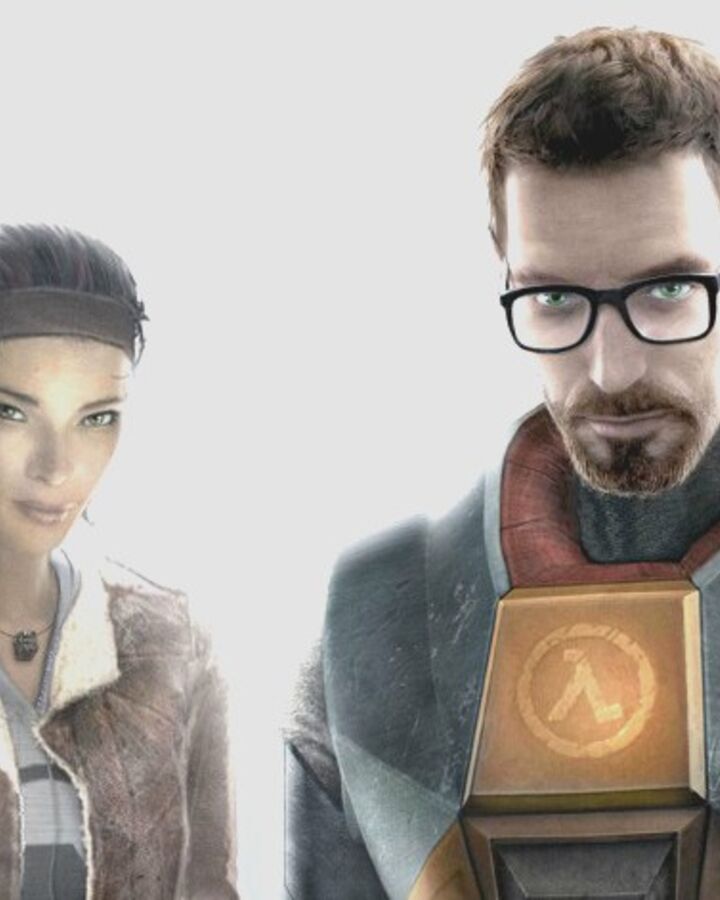
Gordon Freeman develops as a character in the sense that he goes through challenges and accomplishes things through them, he impacts the world and is seen differently by others as a result. He goes from a somewhat unclear start, where he is both a trained scientist but also acts and is treated like a kind of janitor (albeit one to whom incredible things happen – the resonance cascade sequence that tore open the portal from Earth to Xen is still chilling years later). But from there he turns into a warrior, a Resistance symbol and is even mysticised into the Vortigaunts’ “Free Man”. But he’s silent throughout, not saying a word in any of the games. The advantage of that is that he acts more as the player’s avatar than as a character, so he can’t say anything to spoil your fun or immersion (and tbf plenty of other games have done/do this). Marc Laidlaw (lead writer of HL1 and beyond) referred to Gordon Freeman as a “hollow receptacle” at the time of HL1.
There’s a heavy price to this in story terms. Gordon cannot show his own personality, he has less agency, he cannot grow as a character. Examples:
- His actions result from orders he is given, not choices he makes, from starting the resonance cascade in HL1 to attempting to destroy the Citadel in HL2.
- He’s a spectator at the big narrative events. Watch again the sequence in HL2 where Dr Breen (administator of Earth/stooge of the Combine) confronts/gloats at Eli Vance, then Gordon, then Alyx. Eli and Alyx tell Dr Breen exactly what they think and they won’t back down. Gordon, of course, is mute. Dr Breen even says Gordon “has proven to be a fine pawn of those who control him” (referencing both the G-Man and us).
- He can’t express his emotions or thoughts. We don’t know what Gordon thinks about the brutal misuse of his life’s work, the destruction of Black Mesa and death of most of his colleagues, the near-end of human civilisation, the brutality of the world that follows. Does he maintain a moral core? Or does he become callous? Does he cry when Eli dies?
- HL games can be funny, but Gordon can’t be. E.g. Eli Vance hints that Alyx and Gordon should be “getting busy” after the Combine’s “suppression field” (which prevents human reproduction, maybe sexual intercourse) is taken down – this is answered indignantly by Alyx, obviously not by Freeman. Or, from HL2, what did Gordon think of Lamarr the headcrab humping Barney’s head? That kind of thing.
By comparison, Alyx Vance does have a character that we see grow and in doing so breaks new ground in Half-Life games. Like Gordon (loosely), she has an unclear and unremarkable start but escalates quickly: she appears to have status (in the Resistance hierarchy) though she carries out low-level work (observing the Combine), but she goes on to become a warrior and defeat the Combine. The difference is that we see and hear Alyx go through her journey:
- We see Alyx explore her world and we share/relate to what happens to her. She’s not shocked by most of the surface world in front of her – the police state, the empty apartments – because they’re relatively normal to her and she’s always lived amidst them. But she is shocked by the subterranean world of zombies, headcrabs, Barnacles and the Xen fungi (which presumably most people don’t see?) IIRC, the first time she has a serious zombie/headcrab fight she is nearly hyperventilating. So we know how she feels from her reactions, as well as her need to talk to Russell (a scientist who provides voiceover support throughout Alyx), both to explain what’s happening and to distract herself. I was thinking earlier about the sequence in the underground room full of explosives where she talks to Russell about partnering up and he explains his stock option plans for her, or during the Jeff sequence where Russell explains to Alyx his three year plan for mass production of the Russell devices – all to a grateful Alyx. At the same time, Alyx is curious about the old world (vodka!)
- All of this builds a picture of her personality. Alyx Vance is resilient, practical, curious but not intellectual, doesn’t boast, is self-deprecating and her sense of humour tends towards the laconic (e.g. how she explains Jeff – a particularly scary monster in Alyx – to Russell in a distinctly short and understated way given the horror she has just navigated).
- She has an emotional bond with her father Eli, to which we can all relate. The relationship isn’t detailed that much in Alyx – I don’t think they share any memories, they have virtually no face-time during Alyx (albeit they did in HL2), we don’t know their backstory like what happened to Alyx’s mother – but it doesn’t really need to be when we already have a connection to each character from previous games, plus in every interaction in Alyx one of them is in mortal danger and we already know what is foreshadowed for Eli Vance. Alyx is a deeper character through the relationship with her dad (so: HL3 needs’s Gordon’s mum in it, please Valve). There’s a nice twist here when we revisit Eli’s death at the end of Alyx, which gives a deeper poignancy to watching Alyx weep over Eli’s corpse when we’ve just spent x hours being and bonding with Alyx. Then after THAT we see Eli resurrected and spitting fury at the G-Man.
So: Alyx Vance is a stronger and more interesting character than Gordon Freeman given both her talkiness but also her character development. HL3 should have a talking Gordon Freeman (but won’t). It will be interesting to see if Valve decides to deepen his character via other ways, or leave him as the hollow receptacle and focus elsewhere.
One point I come back to later: Gordon not being a talky type, plus the lack of cutscenes, mean HL games have a lot of environment storytelling (they have to).
There are challenges and questions about Alyx’s development as a character, too.
- A key aspect of a character’s progress is having a question or mission. Does Alyx go on a quest? I struggle with this. She doesn’t seem to start with one and her objectives shift according to game events in Alyx: observing the Combine becomes rescuing her father, which then becomes recovering the “superweapon“, then rescuing Gordon Freeman, only to rescue the G-Man. That’s not a quest in the sense that she set out to do any of that. Then again, when she talks to the G-Man she seems to realise her strongest wish for the first time: she says “the Combine off Earth…I want the Combine off Earth“, muttering it first to herself and then declaring it to the G-Man. But I don’t think we can truly say that’s her quest, it’s her general motivation. In any event, it quickly is replaced by the desire to save her father. So what? Well, it’s one way to look at how she develops as a character. It also helps in thinking about what drives her in the next game. I wonder if her drive ends up being revenge on the G-Man rather than the end of the Combine.
- A trickier question: does Alyx get to make choices in the game? Most of the time, stuff happens and she goes along with it. I can’t recall a point in the game where she could do this or that. At the conclusion of Alyx, Alyx’s first request (the Combine off Earth again) is rebuffed and then she’s presented with a situation she could not have imagined: the murder of her father by an Advisor. She seems to choose to save her father. But is that really a choice? She doesn’t know what the alternative is, or what the consequences are. She’s then promptly put in stasis (or whatever the G-Man does in this situation). That would make a person pretty angry. More on the G-Man and free will later.
- More generally, the character study of Alyx could be deeper – e.g. situations where she expresses doubt, where she makes mistakes and deals with them, seeing what she likes about her world, even what she likes to eat (sustenance!)
To be clear: Alyx Vance in Alyx is a great achievement and really takes the Half-Life series forward. Even so, I think these are legitimate questions and help show issues that future Half-Life games will face. Especially given how important Alyx is going to be in future Half-Life games.
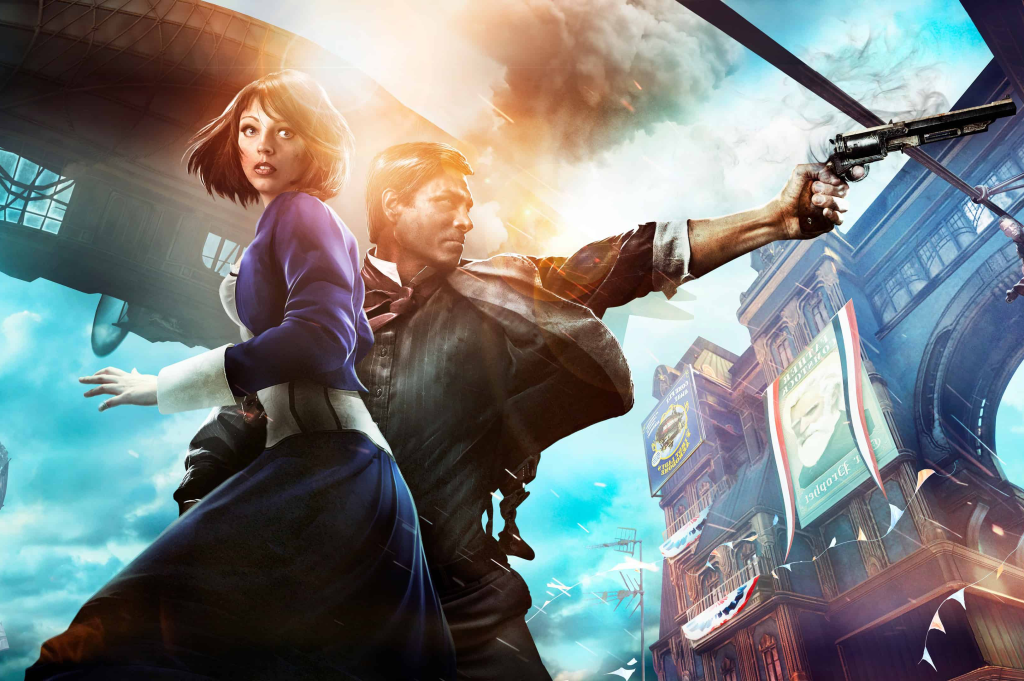
[Side-note: another other all-time favourite game series, Bioshock, went through a similar-ish process across Bioshock 1/2 (silent protagonists) and Bioshock: Infinite (talking protagonist who evolves in significant part through dialogue with a companion character). Looking back, it’s amazing to recall how much was accomplished in Bioshock 1 narratively with its complex layers of extreme socio-economic theories, dystopia and a hero who is manipulated by almost everyone he meets (including his biological father), while also being silent. But Infinite is a much greater achievement in large part because the characters we control have their own personality, make their own choices (sometimes against what we might decide) and ultimately have to face the consequences of their actions and their place in the wider story.]
Gordon Freeman isn’t going through a hero’s journey – he can’t.
A popular way (also one of my favourites) to build/examine story structures is the hero’s journey. More detail on that here, but a short version: a hero emerges from the ordinary world, goes through challenges, triumphs and returns (often through further challenges, often as a changed person). There are all kinds of versions (e.g. I like tragic hero stories), but most people recognise how it works (which is why it’s so successful). Alyx made me think about the hero’s journey for Gordon and Alyx.
I struggle to see how Gordon Freeman is going through a hero’s journey. He fulfils some of the common base criteria: he is a more or less ordinary human (albeit one in a particular place and with particular skills and status) who is called on an adventure. Circumstances and the characters (and we as players) around him push him on that adventure. He goes through challenges. But that’s about as far as it goes. He cannot be transformed or even really changed by what he goes through, because he doesn’t speak, nor does he seem to have any free will or agency. Or put another way: internally we can’t see any change in Gordon Freeman from the moment he enters the test chamber in HL1 through to his final discussion/confrontation with the G-Man in HL2:E2. Some of this comes from his silence, some of it from game design choices, some is from the G-Man.
I had previously thought that the G-Man gives Gordon a free but invidious choice at the end of HL1: work for the G-Man or die in an impossible battle. But actually I realised, in writing this, that at the end of HL2 the G-Man makes a comment to Gordon that “rather than offer you the illusion of free choice, I will take the liberty of choosing for you“. It illustrates the point that Gordon can’t make choices and so he can’t triumph or fail as a hero. At least not as long as the G-Man or others are manipulating him and Gordon can’t talk. Gordon should be spitting fury like Eli – but he can’t show it.
Alyx is going through a hero’s journey, but we’re only partway through it.
Alyx starts out as a Combine-observer. She goes into an underworld (repeatedly :P) and fights Xen creatures. She is reluctant but is given encouragement by other characters (Russell, the first and the second Vortigaunts). She explores her world and fights the Combine. She is reunited with and then separated from her father. She faces more and more dangerous circumstances…
That’s as far as we got so far, the ending of Alyx interrupts Alyx’s progression. We don’t know if Alyx has her quest yet. It doesn’t feel like she has faced her key challenges yet. Her relationship with the G-Man is unclear. Above all, to complete her journey Alyx as the hero needs to return.
So, as I see it, the story set up in Alyx demands that in the next Half-Life game:
- We see Alyx Vance again.
- We understand what is her true quest. To defeat the Combine? Or the G-Man? Or just to ensure her father truly survives?
- Alyx completes that quest (or dies in the attempt).
- If she survives and prevails, she must return home and we see what the journey has done for/to her.
Other relevant story stuff about Alyx Vance:
- HL2:E1, HL2:E2 and Alyx build a narrative that the G-Man has been interested in Alyx for a long time (going back to rescuing her as a child from Black Mesa…somehow…he claims…) In HL2 he says she was an “investment” in which he believed when ‘others’ did not. In Alyx, she then goes on to rescue the G-Man from the Combine and falls into his plans.
- Alyx seems important to the Vortigaunts (more on them later), to the extent that they rescue her and imprison/restrict the G-Man in HL2:E1. We don’t know why.
- Alyx even gains what looks like the powers of the Vortigaunts at the end of Alyx. Probably not narratively significant, more likely a gameplay thing – the Alyx equivalent of Gordon’s Gravity Gun being supercharged in HL2.
[Side-note: Horizon Zero Dawn is another game that does a hero’s journey really well (coincidentally also a strong, young heroine). Its heroine, Aloy, goes from novice to warrior to explorer, trader, even politican. Her surrogate father sacrifices himself for Aloy, a tragic experience that marks her deeply. She learns her true identity and reveals her true character (often through making difficult choices). Ultimately she avenges her father, saves her friends and averts the oncoming apocalypse.Finally, she returns home to her people, shares what she has learned and helps them to find their way in a changed world. ]
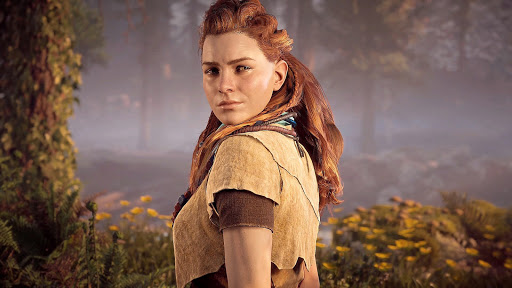
Image credit: Sony/Kotaku UK
So Alyx Vance is key to the narrative future of Half-Life (and provides signposts to what could happen next).
That’s my conclusion from everything above. From a story and a character perspective, Alyx Vance is a more interesting and – I think we will see – ultimately as if not more than important as Gordon Freeman. I am still struggling with this – it goes against a bunch of established narrative about Half-Life. But I think it fits (as long as Alyx remains canon and not undermined/overwritten). Here’s some things that the hero’s journey (plus a dose of speculation from me) suggests that we could see in Half-Life 3:
- Death of someone close to Alyx, a tragic event that both creates drama and would significantly impact her character. Obvious candidates are Eli (for good) or Gordon. Eli, because we’ve seen it happen twice already, because it’s a jarring conclusion to the only loving, filial relationship in the games, because Eli has sworn to fight the G-Man and also the G-Man is probably lying to Alyx in saying she can save Eli. Gordo, because it would be the demise of Alyx’s mentor/role model (and perhaps love interest), a huge blow to the Resistance but also mechanically it would remove the intractable problem of what to do with Gordon as a character and clear the way for Alyx. But, obviously, it would be more controversial than the Red Wedding. For completeness: it could alternatively be the death of a secondary character – Russell, Dr Kleiner, even Barney, but that would have lesser impact. The only downside is that Valve just retconned the death of a major character so killing another is weakened/cheapened.
- Apotheosis: Alyx rises to her apex. It could be as leader of the Resistance or even saviour of the Earth; a symbol to the Vortigaunts on par with the “Free Man“; possibly (but much less likely) as a darker figure more in the direction of the G-Man.
- Resurrection/rebirth: some version of the hero’s journey require the hero to actually die and be resurrected, or to be symbolically reborn. Something like this might have happened in the HL2 episodes to Alyx, so there is partial precedent.
- Betrayal: someone whom Alyx trusts works against her. I don’t have much to go on here. One of the scientists? Judith Mossman? This isn’t the kind of world where we’re going to see Alyx v Gordon.
- Confrontation: Alyx must confront the entity that holds power over her. Most likely the G-Man. This is what I would put money on at this point: Alyx (or Alyx and Gordon) v the G-Man in the end (but it won’t be like they think – more on that later). Technically the Vortigaunts have power over Alyx too but they are a benign power.
Another point I’ve begun to think about, regardless of whether I’m right or wrong about Alyx v Gordon, is this: what kind of finish will Valve plan for their story arcs? Will we see a happy ending, a tragic ending, somewhere in between? Eli suggested (perhaos joking-not joking) that Gordon and Alyx get together. There are wider questions about the future of humanity too (more on that later).
[Side-note: if I’m wrong on this about Alyx, then I think the above still holds true for Gordon Freeman if Valve takes Half-Life in the direction of fulfiling Gordon’s hero’s journey.]
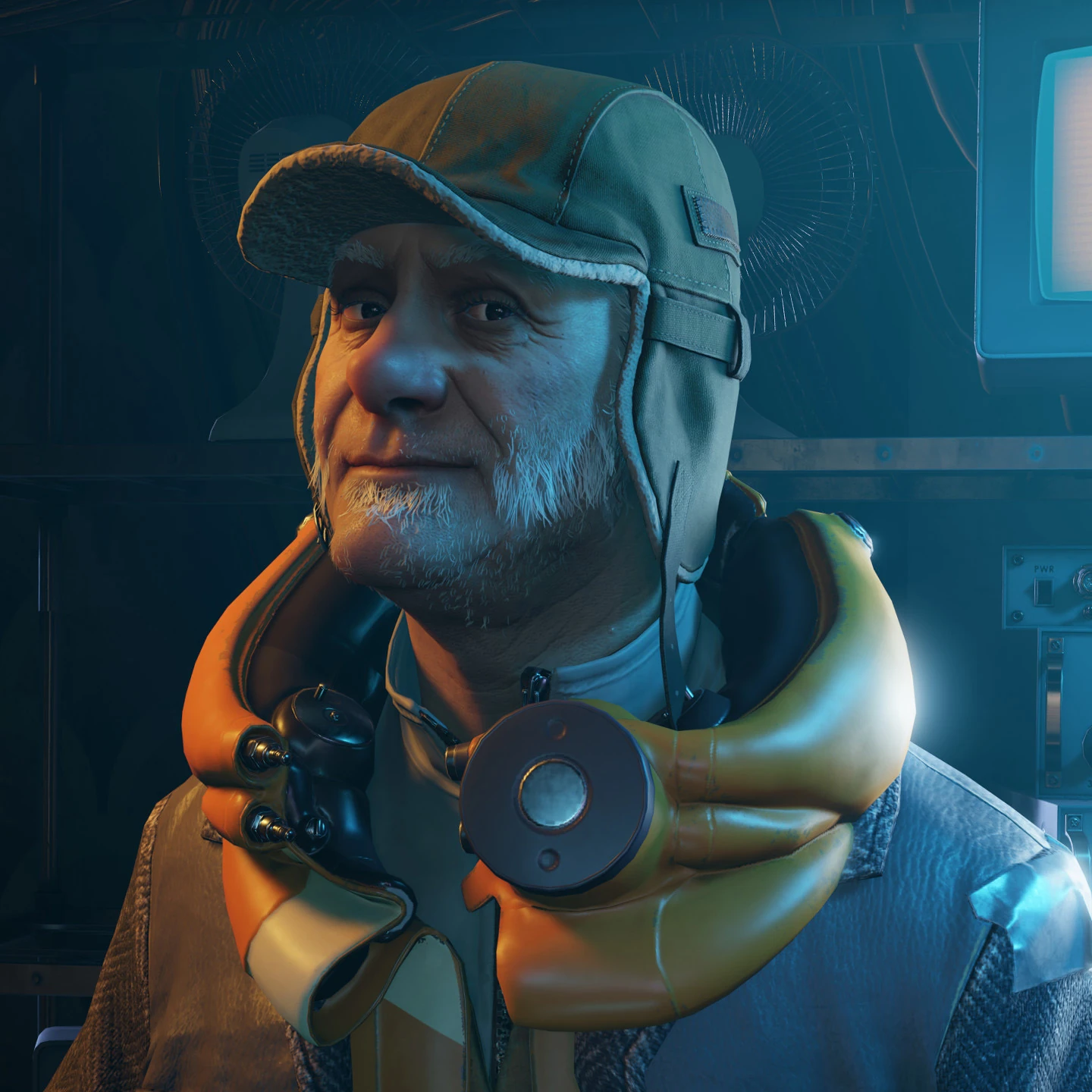
The evolution of Valve game secondary characters: Dr Kleiner -> Eli Vance -> GLadOS -> Russell.
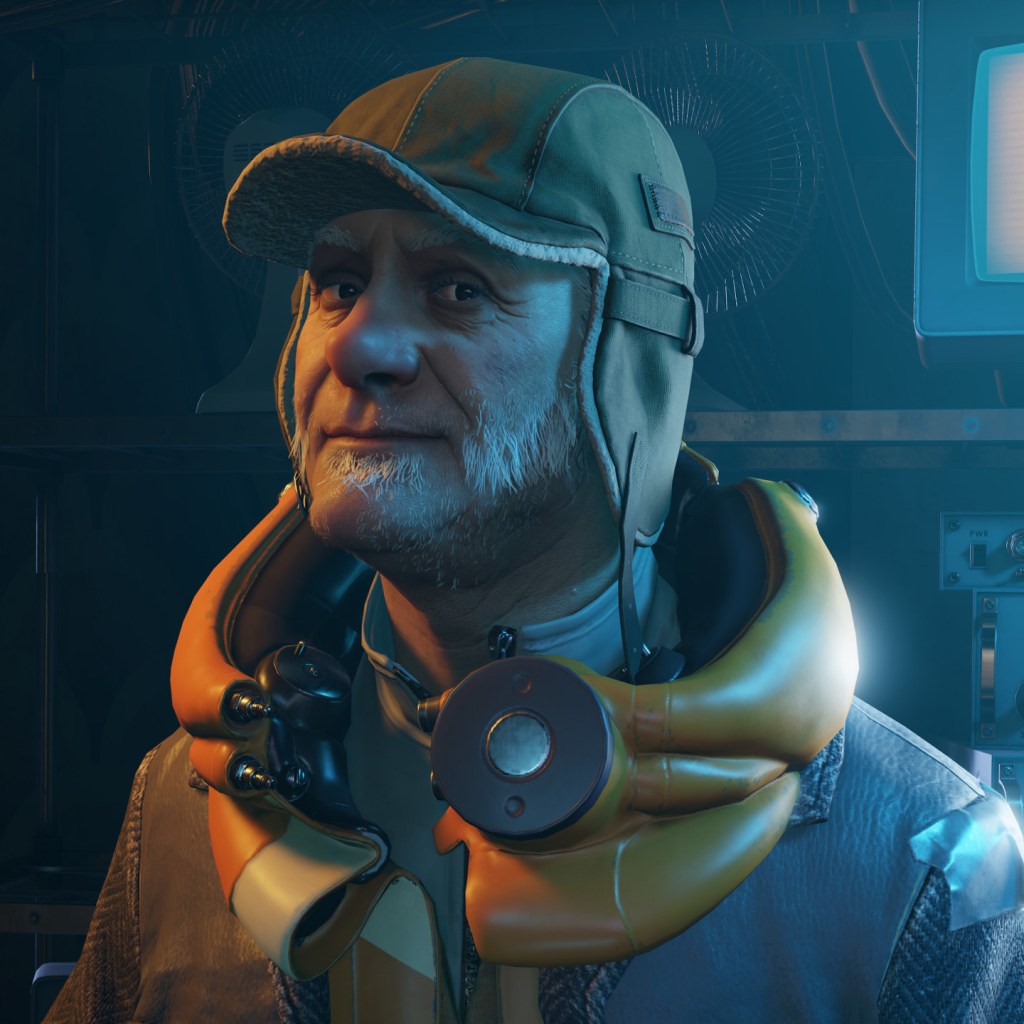
Russell is one of my favourite things about Alyx, he’s a really cleverly developed character and he’s one of the most important ways in which Valve deepens the game overall:
(i) Merely by existing, he provide an essential function: there’s no point having a talking Half-Life protagonist if she has no one with whom to talk (it couldn’t be her dad because he’s imprisoned/escaping for most of the game). It’s both smart and really well-executed.
(ii) He’s funny – which introduces lighter moments.
(iii) Very occasionally, he deepens the tension. There was one or maybe two lines from him, I think after Jeff but I don’t remember the details precisely, where Russell sounded very quiet and serious, it was jarring and brilliant.
(iv) He provides puzzle clues (which I always needed).
(v) His humour illustrates Russell’s character: he is an oddball, he is a boffin, he can veer towards single-mindedness/insensitivity, but it may also be a coping mechanism to what happened to him and to the world (it’s either laugh or cry, as they say.)
(vi) Through him, Alyx is able to ask questions about what happened to the world. It’s usually funny. Sometimes Alyx is asking him to distract herself from the horror before her, sometimes it’s out of curiosity. It builds a bond over time (you could even stretch it into quasi-paternal, since these are questions I can imagine Alyx wanting to ask her dad but he’s not around).
The deeper point for me is that Russell is a leap forward for Half-Life…but not necessarily for Valve. There was nothing like it in HL1. Look at, say, Dr Kleiner – in HL1 he just tells Gordon what to do, more or less, and is interchangeable with other NPC scientists. By HL2 we do have strands of humour more akin to Alyx – e.g. Dr Kleiner now has his pet headcrab, Lamarr (who tries to jump on Barney and just generally gets in the way of everyone). There’s a list of scripted HL2 jokes here. Similar with Eli Vance, who goes from a narratively 2D NPC in HL1 to an increasingly dramatically and emotionally important character, who both provides the father/daughter side of the drama as well as voices defiance to the Combine. Actually the same applies to Alyx as she develops as a companion character to Gordon in the HL2 episodes.
But it’s Portal, in particular Portal 2, that’s the key comparison for me. The AI antagonist GLadOS, like Russell, watches the protagonist Chell go through the game, offering conversational tidbits and observations from time to time, occasionally intervening directly. We can’t take the point very far (I mean Russell is an affable Antipodean scientist, GLaDOS is a misanthropic, murdering machine). But I do think there is something to this: some of what we saw from Portal comes through to Russell in Alyx. I can see how the Campo Santo folks helped a bunch too.
I think all HL games should include Russell type characters going forward.
How the hell did the Combine conquer Earth if all their weapons and ammo are hidden behind puzzles?
The Half-Life series has always been gameplay first, narrative second when it comes to the crunch. This was both fun and slightly annoying at times to me.
- Game mechanics are key to Half-Life games even more than other narrative-driven singleplayer games. The gravity devices are iconic and fun to play, but they don’t make much sense in the world. Where do they come from, why is there only one of each, why don’t the Combine have equivalent tech? Sensibly, the games don’t attempt to answer these questions but, if you stop to think about it, it’s immersion breaking.
- Puzzles. I had forgotten how much Half-Life likes puzzles. I am not a puzzle-y person, but in Alyx they were fun, cleverly designed and with interesting progression over time. They were immersion breaking in the second half of the game though – I still solved every one, but I kept thinking they made no sense most of the time. I even wanted the Combine to walk in on me solving them because that would be more immersive, but usually puzzles were in a safe zone for obvious reasons. My immersion would have been retained with just one scripted sequence where a Combine soldier unlocks a locker easily (maybe using a Combine key of some type), but Alyx has to do it the hard way.
- No cutscenes or exposition. This is a staple of Half-Life going back to HL1. It’s interesting, reading some of the historical materials, about how that wasn’t set in stone from the outset, but it is by now. You could argue the toss on this and in every other game that has to make this choice. Personally, I like games that do both (the Deus Ex series did this very well on the whole, except the ending of Deus Ex: Mankind Divided but that game is mostly dead to me so whatever). Good example: I go back to the Breen/Eli/Alyx/Mossman+Gordon sequence in HL2, which is pretty story heavy while in first person.
There’s no getting around game mechanics, puzzles and so forth running the risk of breaking immersion or interrupting narrative – that’s video games for you. Walking simulators have problems of their own. I’m not really passing judgment one way or the other here, just exploring where Valve tries to draw its line with each Half-Life game.
A section where I talk about show and tell in Half-Life, also interesting and ‘needs work’ stuff in the Half-Life universe.
The Half-Life games veer between show, don’t tell and don’t show or tell at times. Alyx does things better overall, both through the things talked about above but also by putting more storytelling in the world. Here’s some examples I liked:
More obvious stuff: the damn start of the game and every similar outside scene, where I spent several minutes just looking at what was happening. The whiteboard where (presumably) Alyx describes her Combine observations; the free but damaged Vortigaunt and the imprisoned but whole Vortigaunt; the mysterious Vortigaunt ‘choir’ (one of my favourite things in Alyx, btw); the Combine treating zombie areas with infection control.
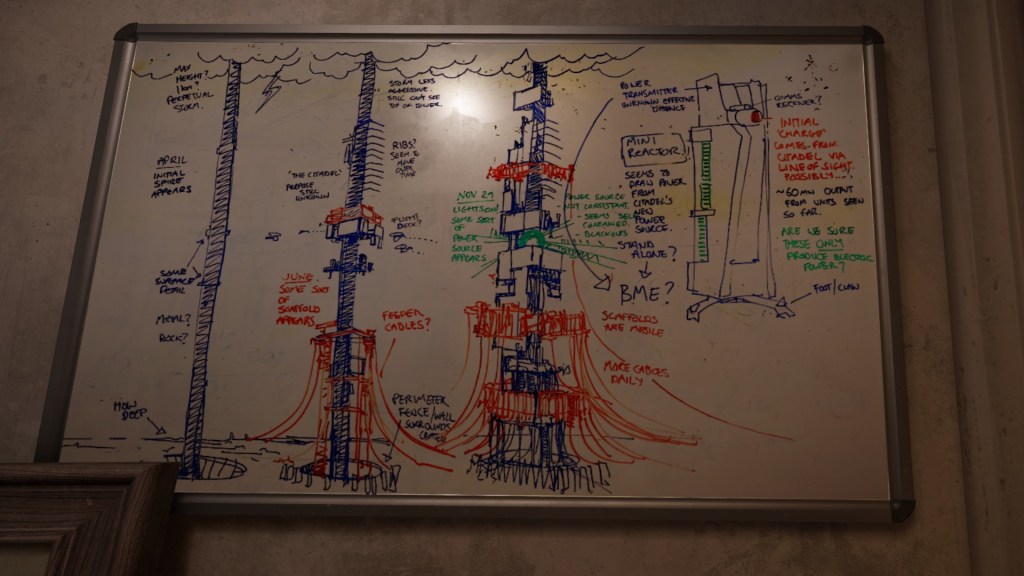
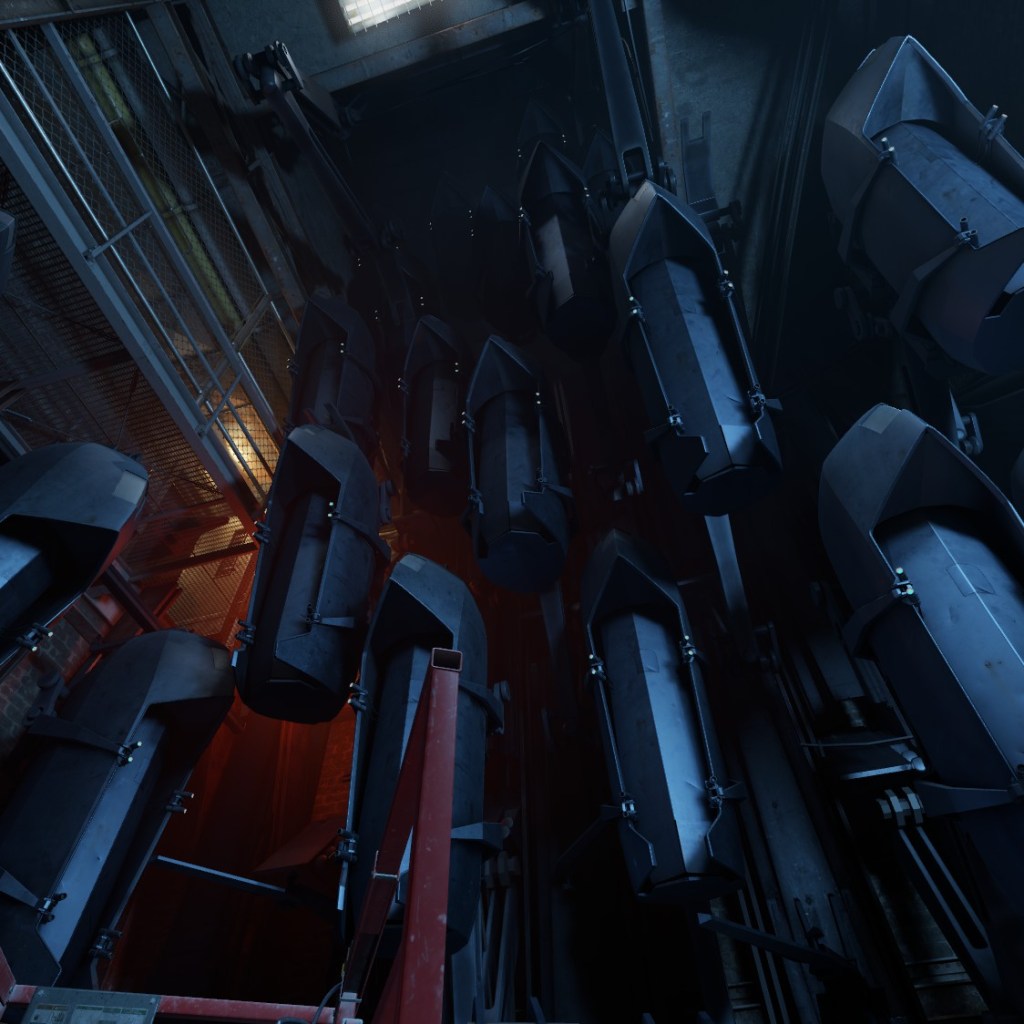
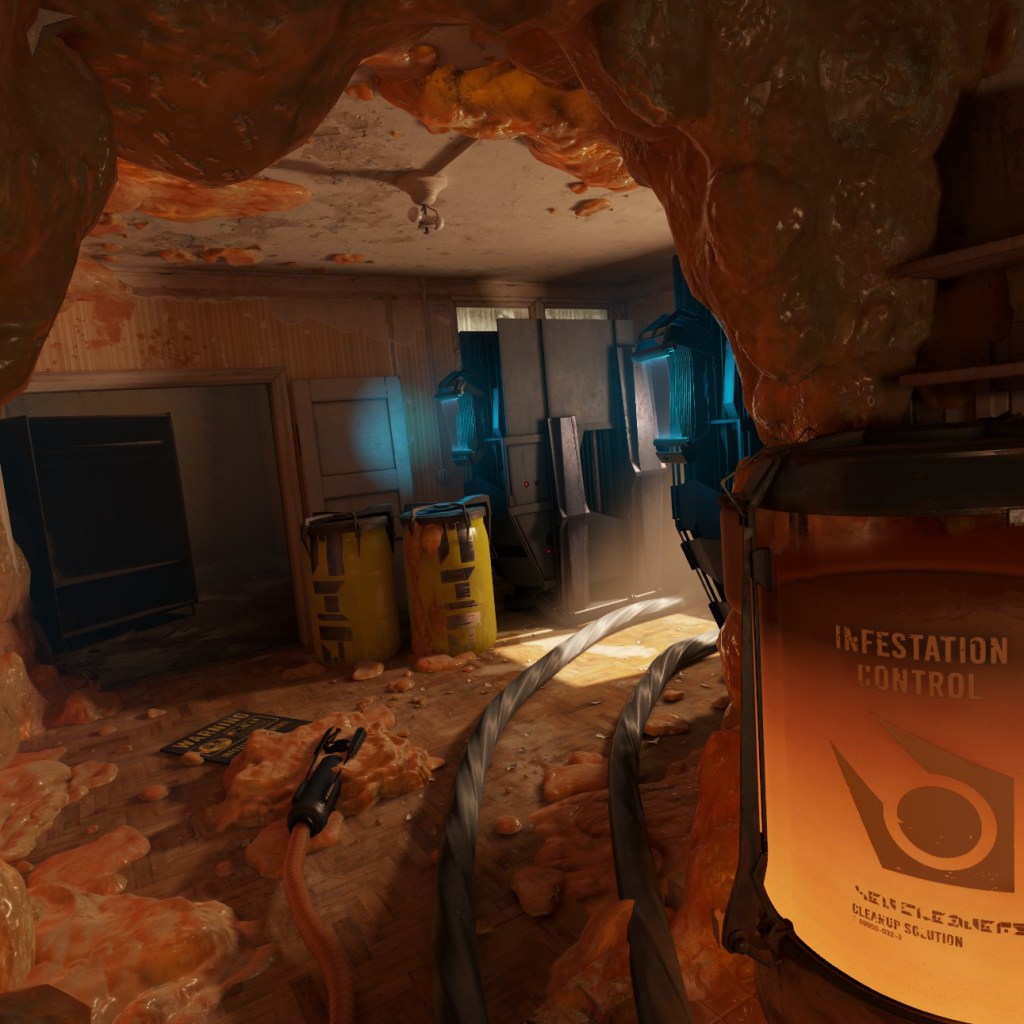
Image credits: Valve/Gamespot; Valve/me;
Less obvious stuff: the faux-Wired cover feature on Dr Breen; the Combine using creatures as energy sources (?)
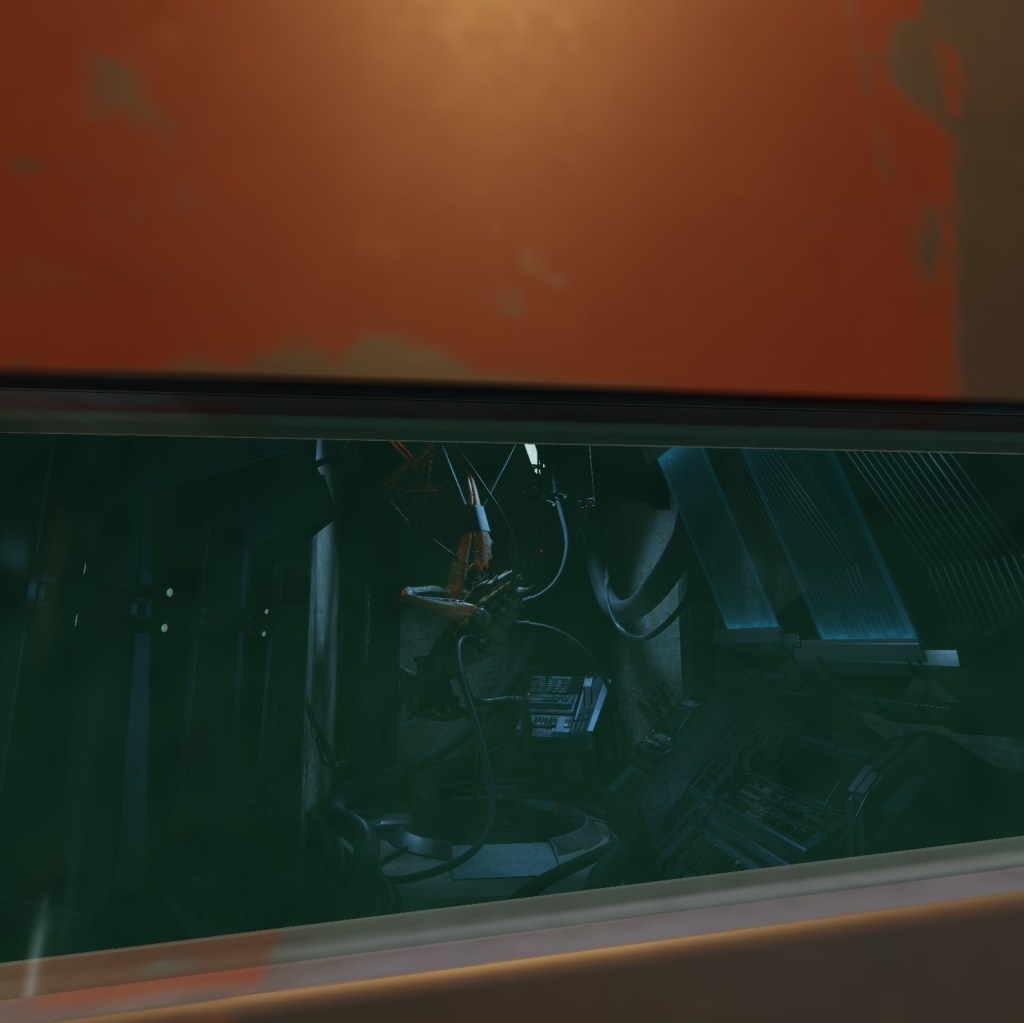
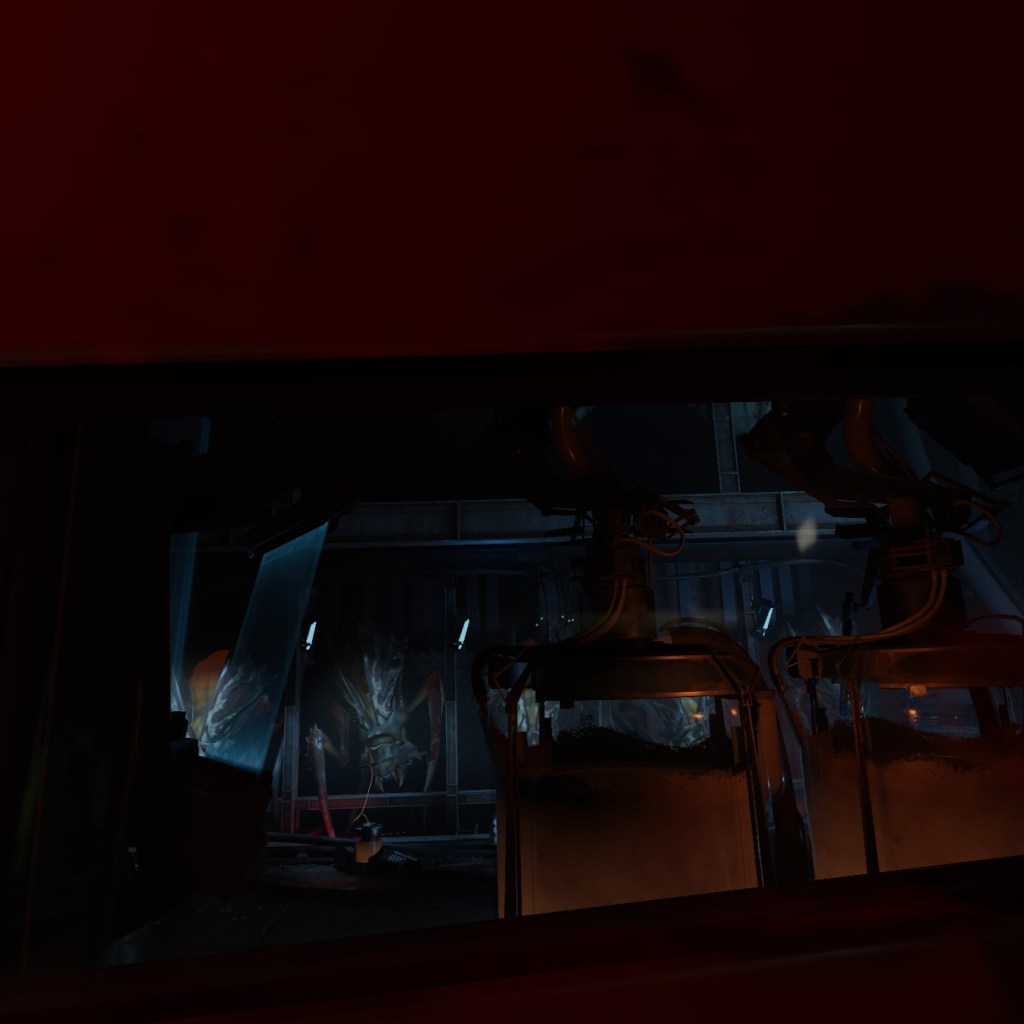
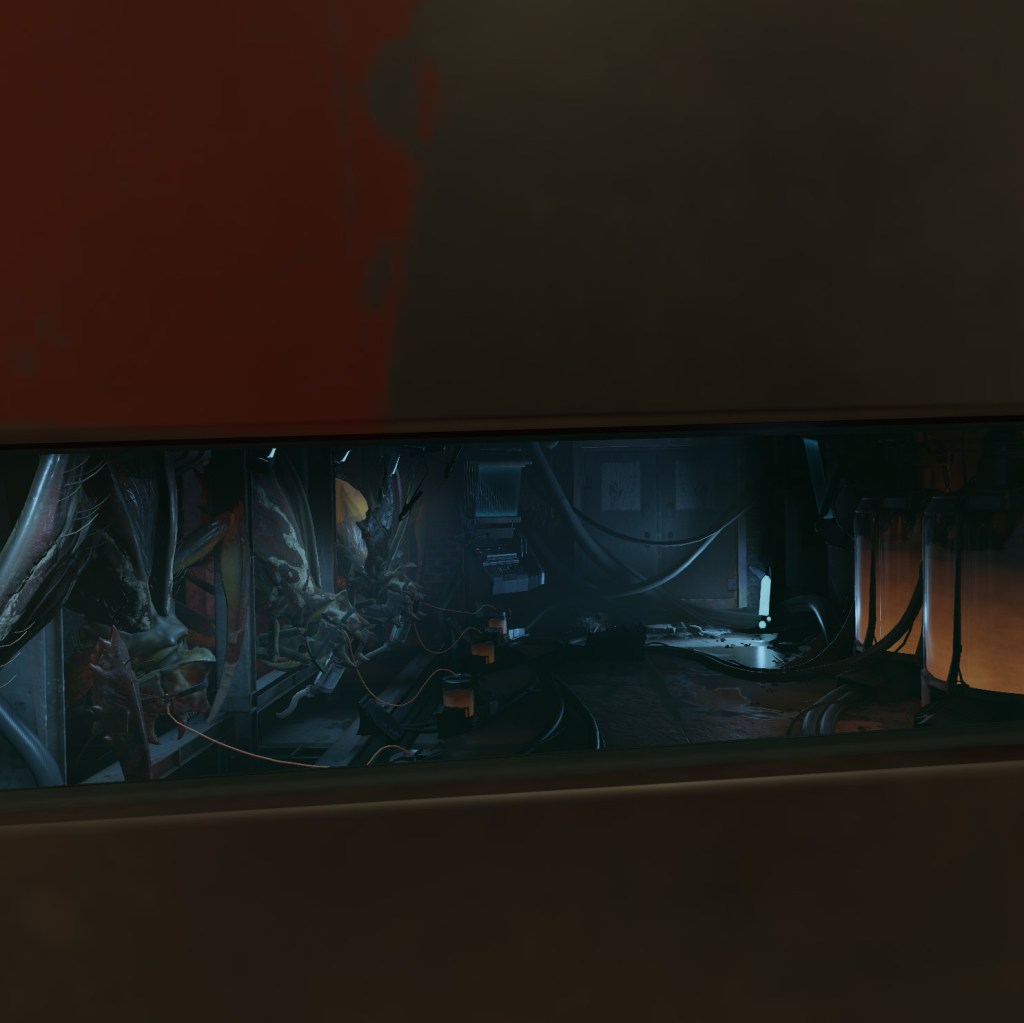
Image credit: Valve/me
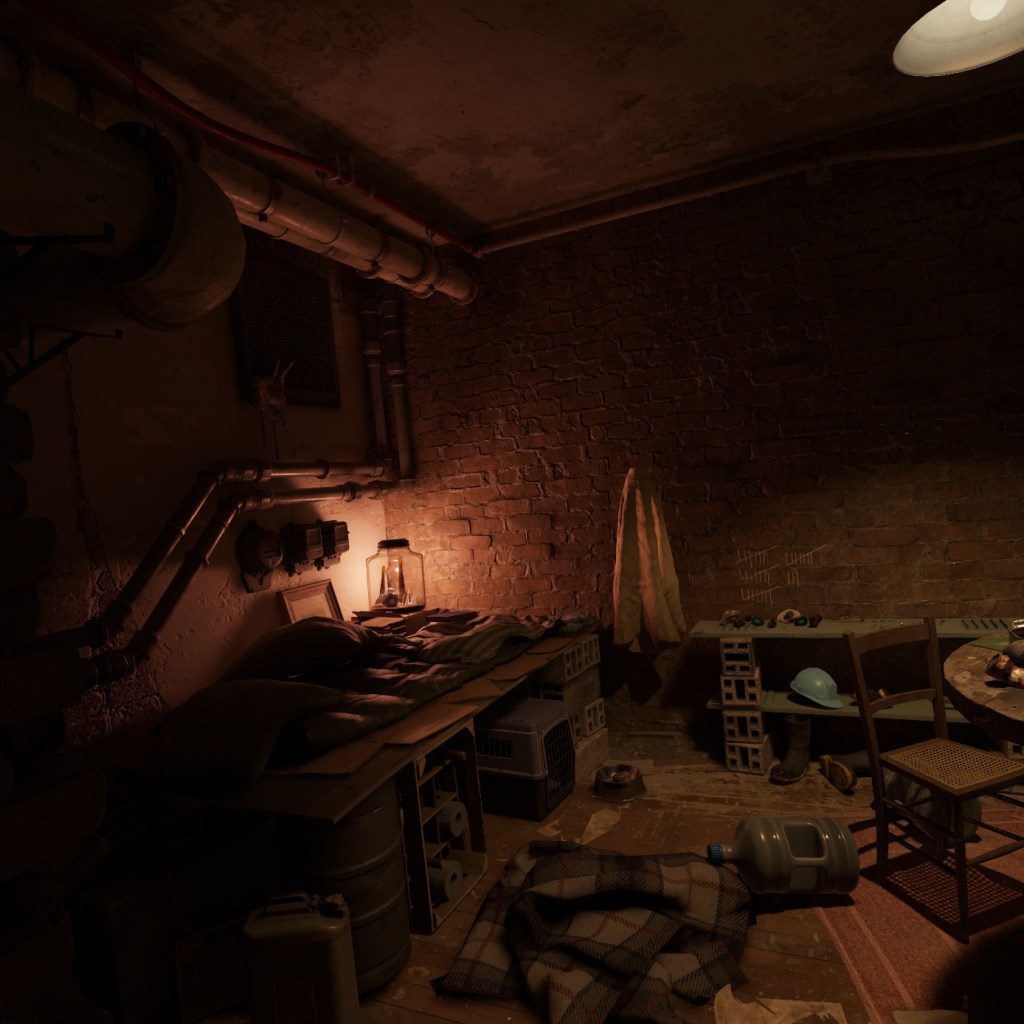
Other storytelling: I had to include this little example, late in the game, of what appears to be an abandoned human hiding hole/home – you can pick up resources there but it’s the little details that got me, like the bed with a Xen fungi-pot-plant next to it, a coat hung on a hook and books lying around. Someone lived and died there. I spent a few minutes in that room, thinking about that person.
I veer between enjoyment that such interesting/important story elements are kept so light/mysterious/there-if-you-look-for-it and mild disagreement at some of the decisions made. Again, not passing judgment, but I’m interested in the choices made by Valve here.
In any event, Alyx got me thinking more than before about some questions about what’s happening in the Half-Life world.
(1) What is the Combine trying to achieve? What was the point of conquering Earth in the first place? Back in HL1 Earth opens a portal to Xen and becomes known to aliens. I recall (but can’t remember the source) that the Combine defeats Xen and then invades Earth, leading to the conquest of humanity in the “Seven Hours War” referenced in the series. But why? What was the point? It might be as simple as “because they could“, or perhaps they are like the Borg and driven to assimilate or destroy. Or perhaps, there is something on Earth that the Combine want (like the Borealis – but the conquest and the Borealis are many years apart). There are more ambiguous matters that may be relevant (see below). But one way or the other, it’s not clear. It’s not like, say, Battlestar Galactica or V or Aliens, where what the aliens/non-humans want clearly drives the plot.
(2) Are there other forces out there? We know there was Xen and we know the Combine has assimilated other species. In one spin-off HL1 episode another planet invades Earth (but I think that’s regarded as non-canon). Is it just the Combine v Earth? Presumably not. Other factions deepen the universe and would help flesh out the Combine’s story.
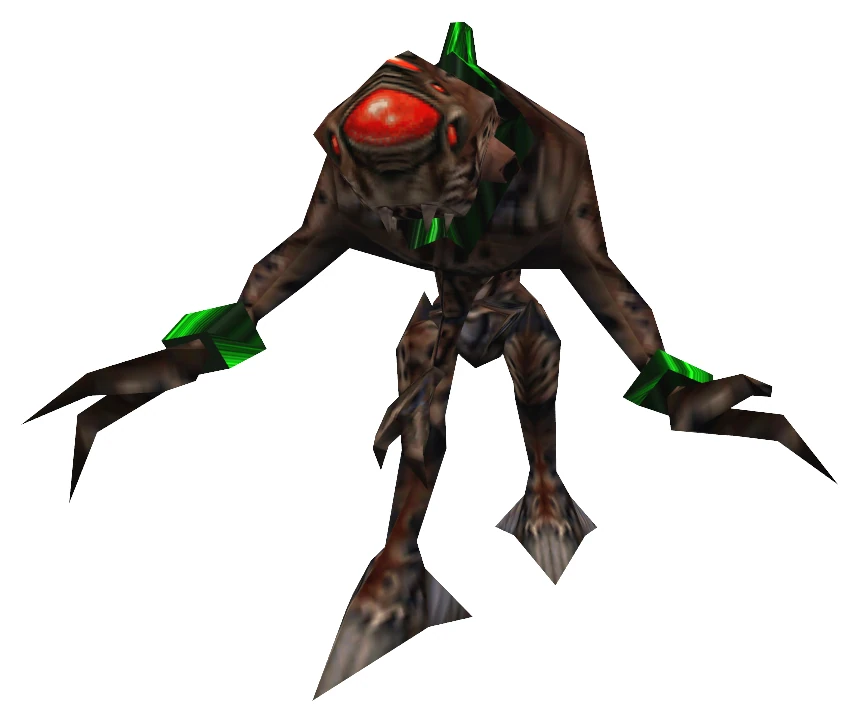
(3) Why does the Combine allow zombies, Xen fungi, Antlions etc on Earth still? This one went round and round my head. It was easy in HL1: the aliens have invaded Earth. Looking back on HL2, I don’t think I looked for an explanation for fighting monsters on Earth. ‘This is Half-Life’, fair enough at the time. But a story is better and more immersive if there is an explanation for what happens and who we meet; after a certain point ‘just because’ or ‘it’s a film/tv series/game’ isn’t enough. Valve seems to agree, since the second half of Alyx drop clues. The infection control systems seen around residential buildings. Use of Antlions in a zoo. The Combine using an energy system that seems to be powered by Antlions, rats (according to one journalist, I couldn’t verify it yet) and maybe the goop that comes from the infection control systems – implying that headcrabs, zombies, antlions and regular Earth animals are all powering the Combine. The Combine is also using the Vortigaunts, somehow.
It may also be that the Combine are using monsters as a defensive layer. I dunno, it feels like monsters are there for gameplay, not for narrative reasons. Ideally, though, it would be both. Jeff is there because of a terrible accident but he also happens to be guarding an entrance to the Combine base and so the Combine leave him there. I think this is the point where we can overthink things.
(4) So what’s the deal with the Vortigaunts? This used to be my favourite HL narrative bone to chew upon (now second favourite, having been replaced by the question ‘is the G-Man a god?’ – see below). The narrative evolution of the Vortigaunts is great.
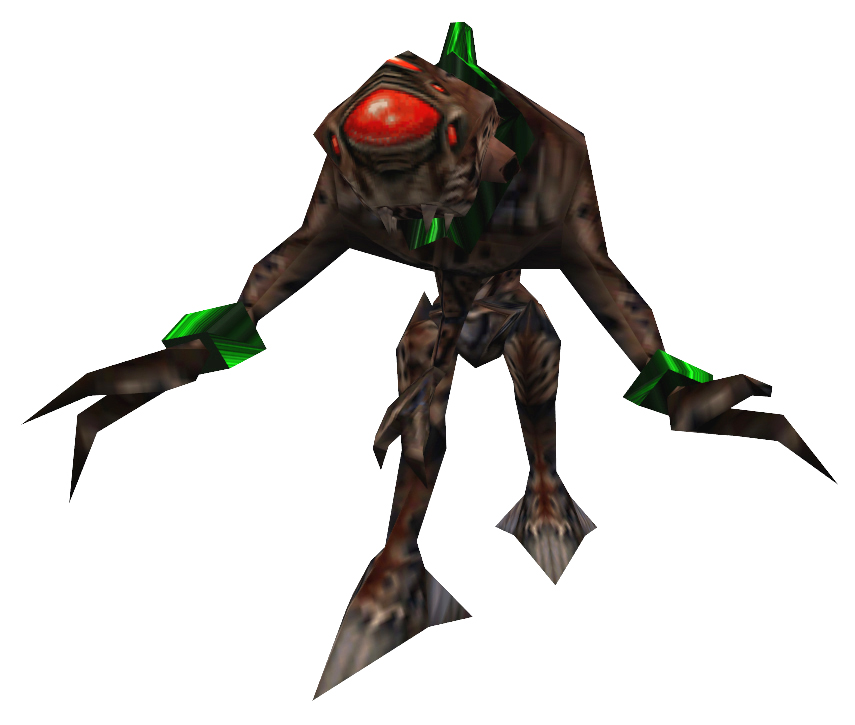
They go from being one of the first aliens for Gordon to fight in HL1, to enigmatic worker-drones in Xen in that same game, then to mysterious allies of the Resistance and harbingers of the Free Man quasi-prophecy in HL2, then by the HL2 episodes they have become time-sensitive, magic-using opponents of the G-Man and participants in an opaque Great Game.
In Alyx, additional mystery is added. We only see two free Vortigaunts (one free but damaged, the other imprisoned but whole). We probably see many more, dozens more, encaged but singing (which in my head I referred to as the Vortigaunt choir and to which I stopped to listen many times). It’s not til HL2: E1 that we will see so many free again.
So, what’s the deal? I need to get my head together on this one, especially following the Vortigaunt’s cave and the mural in Alyx (see a great video about that here). The point I wanted to make is that this is a really interesting narrative vein to mine in HL and it’s great to see Valve doing so in Alyx.

(5) HL2 and Alyx take place in Eastern Europe: what about the rest of the world?
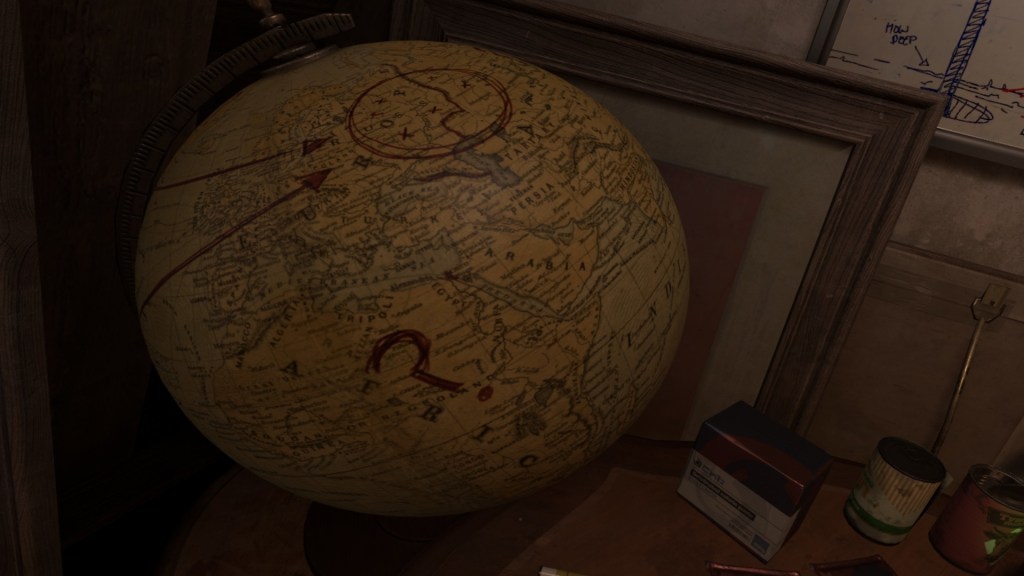
This was always mildly interesting to me, but more or less just taken as fact: for some reason, the game moves from the US in HL1 onwards to somewhere in Eastern Europe (certainly somewhere using both English and a Slavic script). I don’t recall that HL2 says anything about the rest of the world (though we know that Black Mesa was nuked, I think). We know that humans have been shepherded into cities (hence “City 17“), but not why (nor do we get into what would be a whole extra level of depth, like what do people eat?) Then we have the globe at some point in Alyx, which shows a globe with a simple cross over North America and arrows pointing to Europe. It would be interesting to hear more.
(6) What are the Advisors and what are they up to?
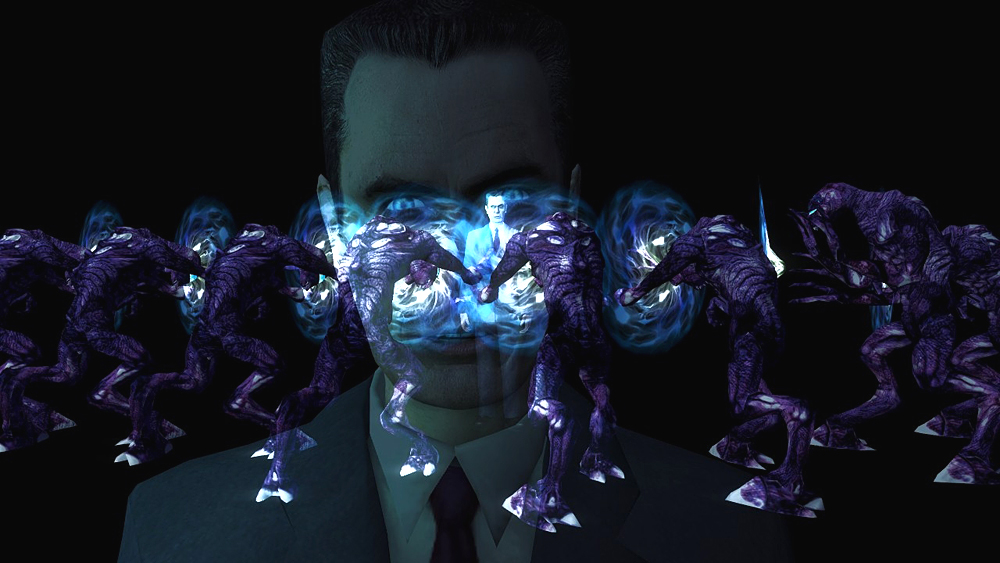
I struggled with the Advisors, to be honest (but this section ends up pretty interesting to me). They were interesting in a superficial way in HL2 (a new, non-fighty alien we hadn’t seen). The sequence between Dr Breen and the Advisors (which implies Dr Breen becomes one) was more interesting. The HL2 episodes drop some more hints (like a glimpse at what’s been called the Combine Overworld).
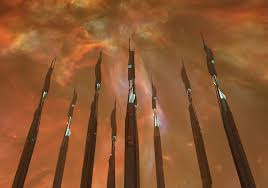
An Advisor killing Eli Vance was shocking (but made less sense why it was an Advisor specifically). A bunch of them dead on the train derailed in Alyx was a ‘huh’ moment. Seeing one talk in Alyx to a mysterious female human about what we thought was Gordon (but was actually the G-Man), then leading into the Combine captivity of the G-Man was considerably more interesting.
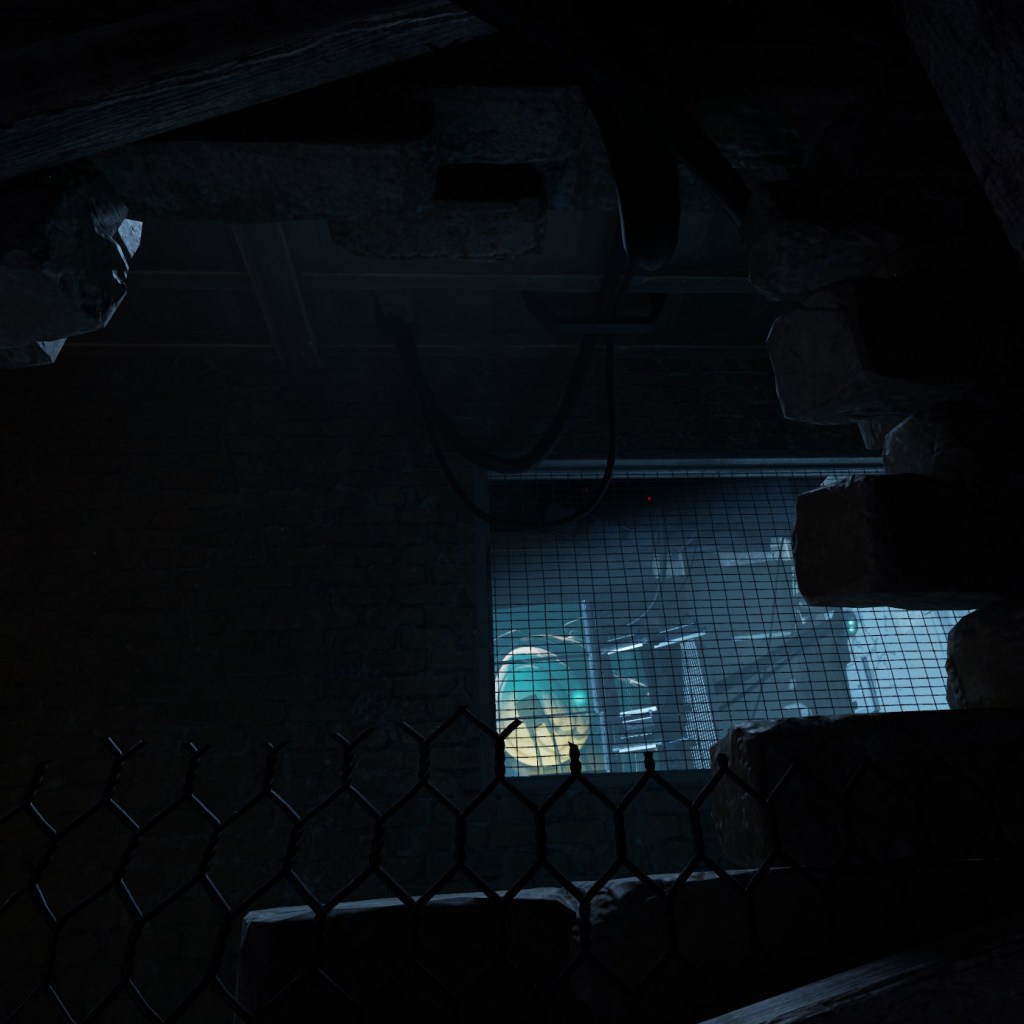
So, the Advisors know all about the G-Man, they probably therefore know who his “employers” are, they know he’s a danger to them and somehow they captured him. I find that all of that a lot more interesting than the Gordon/G-Man switcheroo plot twist (but which was also brilliant).
But still, the Advisors need work as the series continues. Why are they at the apex of the Combine? What are they doing? Is it really as simple as ‘Combine bad, Advisors bad’ or could we have some more complexity? Why should we care about the existence of the Advisors as distinct from that of the Combine?
[Side-note 1: with a bit of making stuff up creative reach, I can see similarities between the Advisors and the Amplitur in Alan Dean Foster’s Damned Trilogy. The Amplitur are a telepathically advanced (but physically incapable) species who have assembled a large empire through telepathic inducement of other species (which they call ‘suggestion’) to wage some kind of crusade against rest of the universe. There is a resistance movement of free species called the Weave who find and enlist humanity as a perfect warrior race. In the long-run, all sides come to see humanity becoming the greatest threat of all, especially as humans are engineered with/develop telepathic powers of their own…]
[Side-note 2: I’m aware of some fan speculation that the G-Man IS an Advisor, perhaps representing a renegade faction of the Combine. It’s interesting but I don’t see the evidence.]
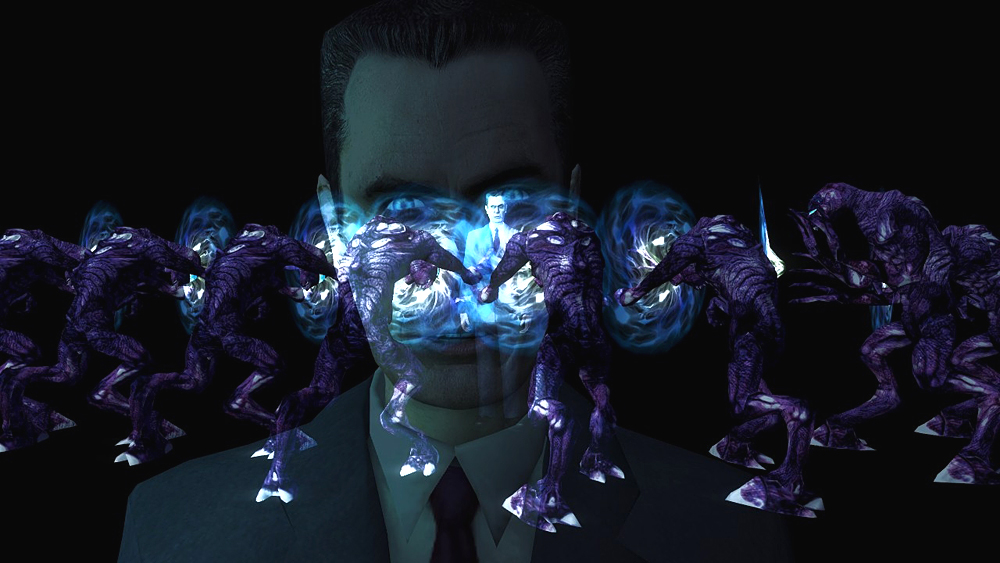
Is the G-Man a villain or a trickster god?
The G-Man is one of the most interesting parts of the Half-Life universe. The historical materials about HL1 suggest that he wasn’t in it from the start, it evolved from HL1 to HL2 onwards.
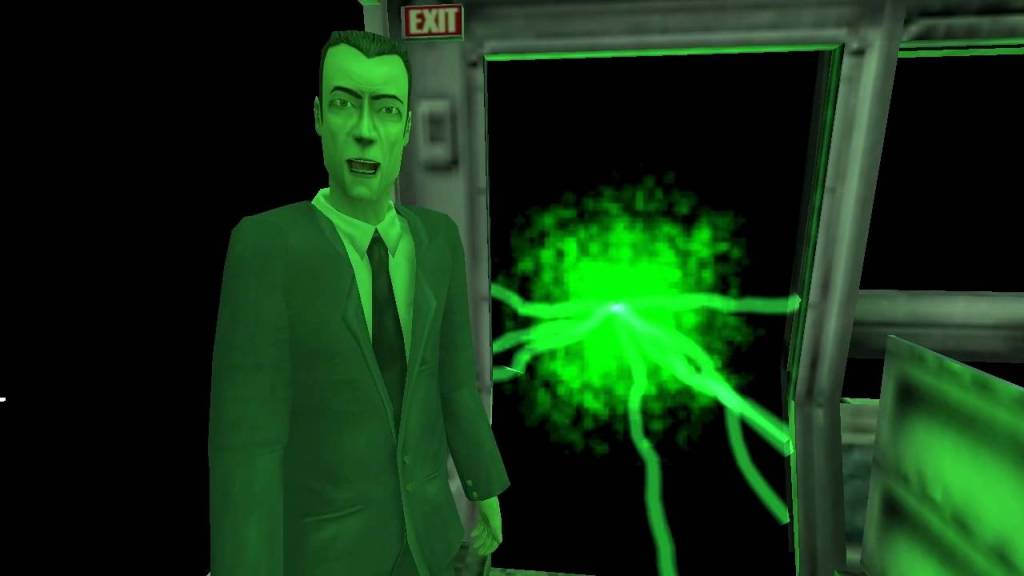

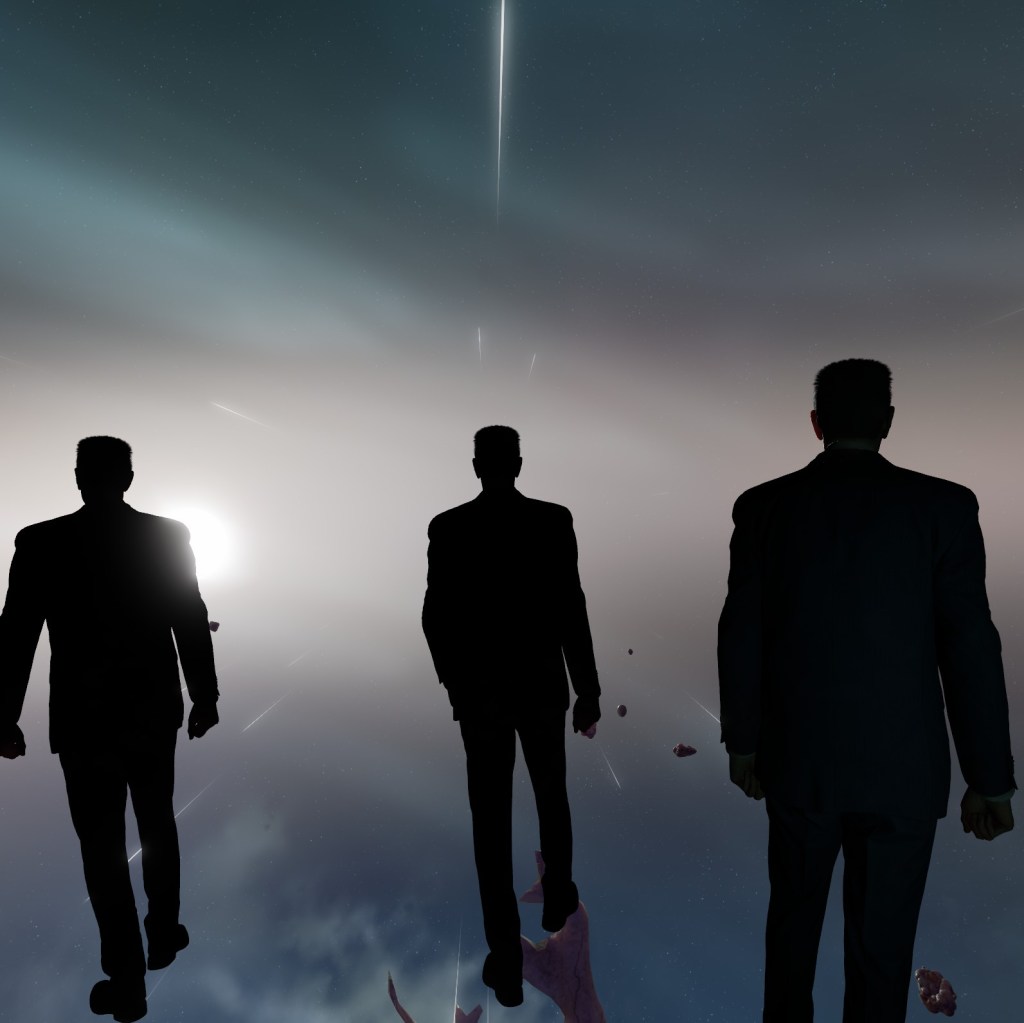

Image credits: Valve/Fandom; Valve/me
Stuff I find interesting about him:
(1) Whose side is he on?
He starts out coming across as a government figure in HL1 (hence “G-Man“) but references his “employers” and has strange, non-human powers. He was involved in Black Mesa, but isn’t a scientist.
He manipulates Gordon, Alyx, and Eli. He is an opponent both of the Vortigaunts and the Combine. Back to his “employers” again, even then he hints at disagreements and factions.
So what? He’s not on the side of humanity, the Vortigaunts or the Combine. He has “employers” but has at least some independence.
(2) His manipulation of Gordon and Alyx.
The G-Man watches Gordon throughout HL1, at the end of which he offers Gordon an impossible choice I mentioned earlier and, in the canon ending, he puts Gordon in stasis. He brings Gordon back in HL2 (“wake up and smell the ashes“) apparently to enflame the rebellion and strike a serious blow against the Combine. After, he seeks to freeze Gordon again but is thwarted by the Vortigaunts, who sever the connection between Gordon and the G-Man for a while. By the time they are reconnected, the G-Man seems to be interested in Alyx. By the end of Alyx, the G-Man seems to have discarded Gordon in favour of Alyx.
Alyx and the G-Man is a work in progress, of course. The G-Man suggests he rescued her at a young age from Black Mesa. She connects with Gordon (coincidence?) The Vortigaunts, not the G-Man, rescue Alyx from death at the Citadel at the end of HL2. The G-Man gives an unconscious Alyx the message “prepare for unforeseen consequences” to give to her father, which she does just before he is killed by an Advisor that appears from nowhere (coincidence?)
A big complicating factor in all of this is the time-travel/paradox aspect of Alyx (how many Alyxes are there, how do we reconcile HL2:E2 with Alyx etc). In that parallel-whatever-it-is that we see in Alyx, he offers a boon to Alyx only to yank it away, save her father (pretend to save her father?) and lock away Alyx for his own ends.
It’s all rather tangled. Either the G-Man planned it from the start or he is playing a very good game at turning events to his own ends.
(3) The G-Man vs the Combine and the Vortigaunts.
The Combine imprisoning the G-Man was a shock to me at the time, but clear in retrospect: the G-Man had (through his human pawns) caused great harm to the Combine on Earth, of course the Combine would see him as a threat if they were aware of him. Yet narratively he existed in a separate bubble to the Combine until Alyx (at least to me). There’s lots of questions here. How does the Combine become aware of him? How do they imprison him? Why in that bizarre prison? Is he imprisoned?
Is the G-Man manipulating the Combine and the Vortigaunts too? He may have set in train the events that lead Alyx to rescue him (he didn’t seem surprised to see her in Alyx). He was aware of the power of the Vortigaunts in HL2:E2, chose his moment and manipulated Gordon and Alyx. Again, this is the point where we can overthink it.
(4) So is the G-Man a villain? / The G-Man as a trickster god.
So it seems like the G-Man is playing 8D chess with everyone. Perhaps he has “employers” or perhaps not, but the story still works if he made the whole thing up and, like I said earlier, if they do exist there are faint hints he manipulates them or at least works around them too. Maybe he set the whole thing up, maybe he’s flying expertly by the seat of his pants (or both).
Do his actions make him a villain, a baddie? There’s lots of internet chatter on that theme. I don’t think so, I think that’s too simple a label. Like we’ve talked about, he seems to have helped the heroes/’good’ faction at times. There are things which he does which could be interpreted as villainous (how he behaves to Gordon, probably arranging the murder of Eli or at least facilitating Alyx’s witnessing of it). But it’s too simplistic to call him a villain full stop – at least at this point, before we know what his motives and intent are.
It struck me after watching the Alyx ending a second time that the G-Man is an enigmatic but powerful figure like say Dr Who or Rick from Rick and Morty. Both of them are loosely designed around the idea of the wandering god or the trickster god (plus Rick is modelled partly on Dr Who). Not literally that they are divine beings, but that they are so high above human understanding and capabilities that they may as well be gods. As Rick says, “do you think if God existed he could do it? The answer is no. If God exists, it’s f*cking me!”
The trickster is one of the great archetypes of human stories, we see them in many cultures over history from Anansi to Loki to the Joker. They are usually (but not always) cunning. They often have or claim to have secret knowledge. They mock authority and break rules. Above all, it’s often very ambiguous what they want, who they are helping and whether that will remain the case tomorrow. Books have been written about this stuff, but you get the idea.
If the G-Man is being modelled on the trickster then we will continue to see powerful, unpredictable twists in his story and his impact on the Half-Life universe and it will be more or less pointless in the end to try to pin down what he wants or to look at him like a ‘normal’ character or even to fight him.
Other stuff I may talk about another day:
That’s as far as I got so far. I enjoyed this, I hope it’s interesting and useful. There’s more I might write about in the future, or enjoy reading others write about:
- Alyx as a VR game: motion, gameplay, level of detail etc.
- Horror in Half-Life games.
- Is the Combine ‘bad’? Does it matter?
- Human free will in a world with higher level beings like the G-Man and Vortigaunts.
- The brilliant design of the final speeches in Alyx and the weight that every word carries.

 Jas writes stuff